
Zhenevjeva Minarolli CEO & Co-Founder, NAViiUM Consultancy From Albania to the United Kingdom and Dubai, Zhenevjeva Minarolli's international journey reflects a career shaped by resilience, strategic vision and a global outlook. As CEO & Co-Founder of NAViiUM Consultancy, she brings together business strategy, leadership and international market expertise, helping companies navigate the opportunities of the UAE. For G Travel with Style, a conversation about ambition, lasting value, cultural intelligence and the evolving role of Albanian entrepreneurship on the global stage.
Zhenevjeva, your journey has taken you from Albania to Dubai, one of the most competitive and ambitious business environments in the world. What was the woman who first arrived in Dubai looking for, and what did she discover that she never expected?
I had already spent years building, fixing and operating businesses - some of it through very difficult situations - and I knew what pressure I could carry. I wasn't coming to Dubai to discover who I was professionally. I was looking for possibility. A couple of years earlier, I'd left a stable and successful executive career expecting an adventure, and found a life-threatening diagnosis instead. That has a way of removing the noise. It also asks you a question you don't get to dodge: if you weren't here to hold it up, what would actually survive? I didn't have a tidy answer sitting there waiting for me. I just knew I wanted to spend whatever time I had building something on purpose. In the recovery that followed, what became clear was what I wanted to build, and what I wanted it to stand for: intention, integrity, and impact. Dubai didn't give me that clarity. What it gave me was an extraordinary place to act on it. What surprised me most was how close capital, government and ambition sit to one another here - and how fast that closeness can expose you if you're not ready for it. Dubai does not promise success. It gives you the opportunity to build it.
Dubai is often described as the land of opportunity. But from your experience, how can an entrepreneur distinguish a genuine opportunity from a beautifully packaged illusion?
I always ask what happens on day 90, not day one. Illusions are usually beautifully front-loaded. There's a launch party, a perfectly designed deck, everyone in the room telling you the market is booming. Then I remove Dubai from the sentence. If this opportunity wasn't in Dubai, would this business still make sense? Forget the pitch and your ability to sell a story, and ask instead whether the problem you're trying to solve actually exists, and who pays to have it solved. Why here? Why now? Why you? And what would have to be true for this to fail? That last question is often more useful than asking why something will succeed. Dubai attracts ambition, and ambition can make very average ideas look extraordinary for a while. A genuine opportunity survives all the questioning. An illusion usually needs the excitement around it to stay intact.
NAViiUM works with entrepreneurs and companies entering, building and expanding within the UAE. What is the biggest misconception international entrepreneurs have before they enter the Dubai market?
That setting up a company means you have entered the market. A licence gives you legal existence. It doesn't give you customers. It doesn't give you a reason for anyone here to actually buy from you. The second misconception is that because Dubai moves quickly, you can shortcut the thinking. In my experience, speed rewards preparation. I see founders spend weeks debating licences, structures, office locations and visas, and remarkably little time asking who their first ten customers will be. The administrative side of market entry in the UAE is efficient - the government has invested heavily in lowering the barriers to entry. Commercial entry is something else entirely. The market is made of people with different aspirations and different ways of working. Dubai is home to residents from nearly every country on Earth. You need to be aware of that before you operate here. Existing as a legal entity is not the same as earning the market.
If you had to choose only one, capital, an exceptional idea, or the right network, which is most decisive for building a successful business in Dubai, and why?
The right network, without hesitation. But not a collection of contacts. Capital buys you time, and an idea gives you something worth testing. The right people shorten the distance between what you think is true and what the market actually knows. I would choose the network that tells me the truth over the one that simply opens doors.
The UAE moves at extraordinary speed. How do you build a business strategy that remains relevant when the market itself is constantly reinventing the rules?
The rule is that there are no rules - not that chaos should prevail, but that businesses need to stop treating strategy as a document. A strategy should tell you where you're going, what you believe, what you're choosing, and what you're deliberately not doing. The biggest mistake I see is companies staying loyal to a decision simply because it once worked. Markets change. Customers change. Technology changes. Your own business changes. So I build around strong principles and short feedback loops, and I keep coming back to the same two questions: what's changed, and which assumption underneath our plan is no longer true? Businesses rarely question something while it's still producing results, which is exactly when the risk is highest. This lets the strategy stay consistent while the decisions underneath it keep evolving.
At what point should a CEO recognise that the strategy that created the company's success will no longer be enough to take it to the next level?
Usually before the numbers make it obvious. A strategy doesn't stop working overnight - the environment around it changes first. Growth slows even though everyone's putting in more effort. Customers start behaving differently, and you notice it in small ways before anyone says it out loud. Margins tighten. Competitors reset what's normal, and the thing that used to set you apart suddenly becomes the price of entry. That is where the CEO's role becomes critical. You cannot stay emotionally attached to a strategy simply because it created the company's success. Your responsibility is to keep asking whether the assumptions underneath it are still true - what's changed in the market, what customers are telling us, where we're working harder for the same result. The difficult moment is when the strategy is still producing enough results to defend itself. By the time it has clearly failed, you're already late. A good CEO has to be willing to challenge a successful strategy while it is still successful.
There is a difference between a company that simply generates revenue and one that creates lasting value. What, in your view, makes that difference?
Put two companies next to each other, generating exactly the same revenue. In the first, the CEO holds the client relationships, one employee knows how everything works, decisions live in people's heads, and losing the biggest customer would seriously destabilise the business. In the second, customers trust the company rather than one individual, knowledge is captured, people can make decisions, delivery is repeatable, and no single departure can bring the whole thing down. The accounts may show the same revenue. I would never value those two businesses the same way. Revenue is evidence that somebody bought something. Value is what you've built underneath that revenue - the trust, the capability, the things that don't show up on a balance sheet - and ultimately, how much of it survives when you remove the person or relationship it currently depends on. A company can generate excellent revenue and still be incredibly fragile. I'm interested in the value that lasts.
Dubai is a meeting point of cultures, nationalities and business philosophies. How important is cultural intelligence when you are building a truly international company?
People sometimes reduce cultural intelligence to knowing etiquette. It goes much deeper. I think of companies as living, breathing entities made of people, and culture shapes how they behave. Cultures disagree differently, and read urgency differently. Trust gets built on different timelines. Hierarchy means one thing in one room and something else entirely in the next. Even silence isn't neutral. And a “yes” doesn't always mean the same thing. If you lead an international company assuming everybody thinks, negotiates and communicates the way you do, you will misread people constantly. Living across different cultures taught me something useful early: being understood is partly my responsibility. You cannot keep blaming the listener for hearing something differently from how you intended it.
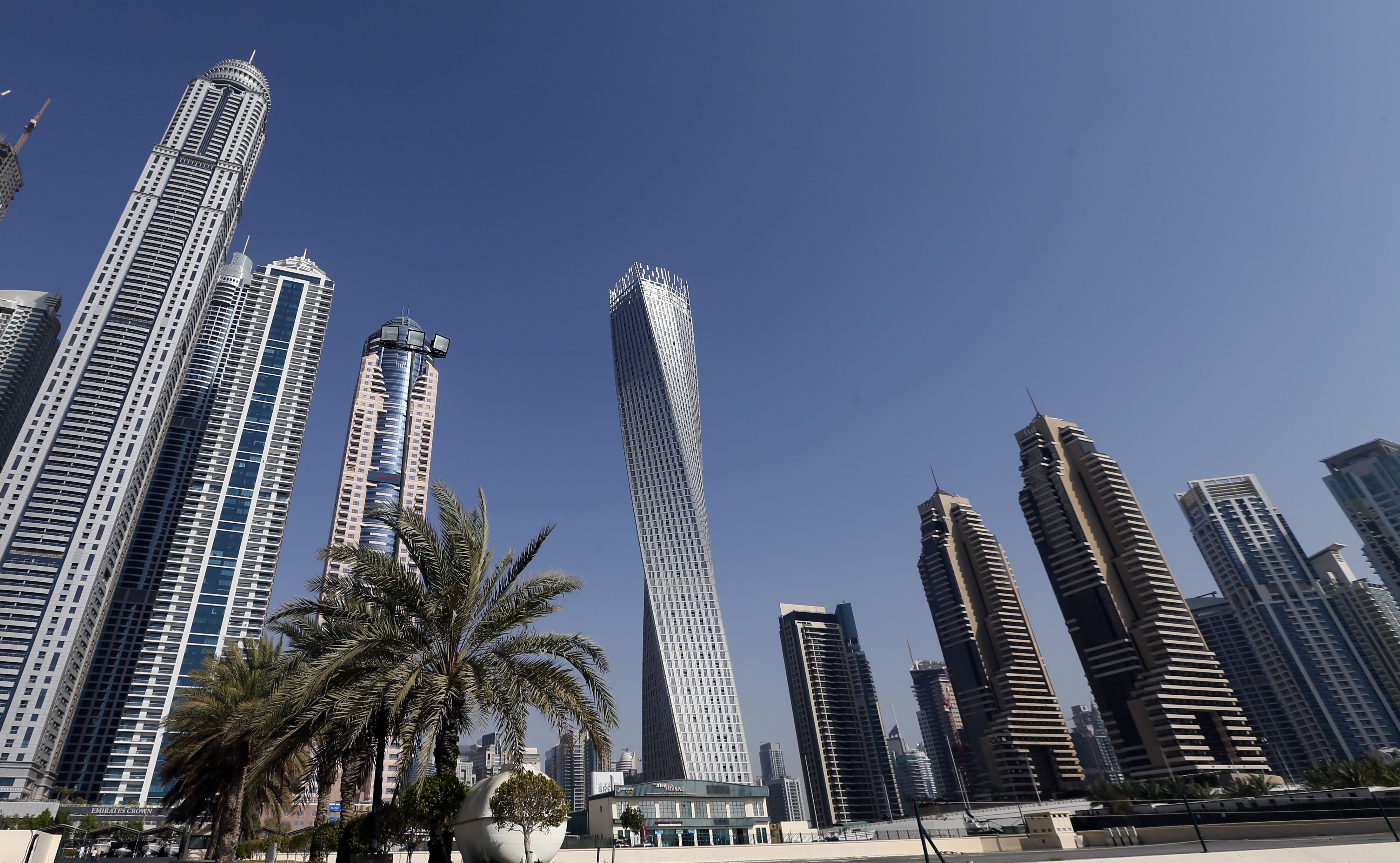
Let us bring the conversation back to Albania. If a young Albanian entrepreneur came to you tomorrow and said, “I want to take my business to Dubai,” what would be the first three questions you would ask before discussing the opportunity?
First: why Dubai? And if the answer is “because there is money here,” that's not good enough. Second: who exactly is going to buy from you here, and why would they choose you over somebody already in the market? Third: what are you prepared to change? To enter another market, you have to respond specifically to its demand. If your product, pricing, positioning, operating model and leadership style all have to remain exactly as they are, I wouldn’t call that expansion - that’s the business just relocating, with no guarantee the success travels with it. Underneath those three it’s the question of whether you genuinely see a market opportunity, or are you attracted to what Dubai represents? There's nothing wrong with ambition, but the business still has to justify the geography. Sometimes the honest answer is that the company isn't ready for Dubai yet. That's still a useful answer.
Do you believe Albanian entrepreneurs are ready to compete internationally, or do we still need to change the way we think about scale, positioning and value?
The talent is absolutely there - I work with a lot of very successful Albanians across the world. Coming from a smaller market makes you resourceful. You learn to do a lot with very little, adapt, and solve problems. You learn to operate with uncertainty, which changes the way you assess risk. Those are valuable traits internationally. Where I'd challenge us more is positioning. There's a tendency to price and present Albanian capability as regionally modest, when the actual expertise is internationally competitive. Scale isn't only about the size of the market - sometimes it starts with how you perceive the value of what you've built. International markets ask a harder question: why are you uniquely valuable? There has to be a shift in what we ask ourselves. Stop asking, “Is this good enough outside Albania?” and start asking, “Is this good?” If the answer is yes, position it accordingly.
You have worked at the intersection of finance, strategy, operations and leadership. When businesses fail, what is most often at the heart of it: lack of capital, lack of strategy, or lack of leadership?
If I had to choose one, it would be leadership - and not as a simplistic criticism of the CEO. Leadership determines whether bad news is allowed to travel upward. Whether a strategy gets challenged once reality changes. Who ends up in which role, how capital actually gets allocated, and whether the hard decision gets made early - or gets put off until it's not a decision anymore, just a consequence. Businesses can survive a bad strategy, because they can change it. They can sometimes survive a lack of capital, by changing the model. What's much harder to survive is a leadership environment that cannot see, hear or respond to what's actually happening. Most serious business problems have been visible somewhere in the organisation for a long time before they appear in the numbers. The question is whether the organisation let that information travel.
After more than two decades in business, what have you learned about success that no MBA, university or business book could have taught you?
That competence doesn't protect you from fear, and fear doesn't make you incompetent. No course really prepares you for making an important decision while part of you is still wondering whether you're wrong. Experience also teaches you that people rarely hand you the real problem neatly packaged - they describe symptoms. A financial problem may actually be a leadership problem. A difficult employee may be reacting to something nobody else is willing to say. Books teach frameworks. Being in the room teaches you to notice what doesn't fit the framework. Experience should give you pattern recognition, but also humility. The moment you become certain you've seen everything before is the moment you stop seeing what's actually in front of you.
Is there a price to ambition? And how do you recognise the moment when ambition is building your life rather than consuming it?
There is always a price to anything worth having. The question is whether you're choosing it or absorbing it by default. My test is simple: does this still feel like mine? Not “is it working” or “is it growing” - those can both be true while you slowly disappear inside your own business. I don't think ambition should always be perfectly balanced; some periods are intense, and sometimes that's a conscious choice. I get concerned when rest starts making you feel guilty. When a conversation with someone you love starts to feel like time stolen from work. When every achievement is immediately converted into the next target. The business may still be growing. Something else is shrinking. That's a terrible trade if you don't realise you're making it.
Women are increasingly shaping the entrepreneurial landscape of the UAE. What would you say to a young Albanian woman who has a great idea but is still afraid to turn it into a business?
I wouldn't tell her not to be afraid. Fear is often perfectly rational - starting a business can affect your income, your reputation, your family. Pretending none of that matters is not courage. I would ask her instead: what evidence do you need to take the first step? You don't need enough confidence to build the whole company tomorrow. Start smaller than your ambition. Speak to customers. Test something. Sell one. Build the smallest version that can carry some weight, then learn from what happens - success or failure, both teach you something. That's the evidence. You don't have to wait until you feel brave enough to start. Very often, you feel braver because you started.
If you could sit across the table from the Zhenevjeva of twenty years ago, what would you tell her today?
Stop assuming that because you can carry something, you should. I spent years confusing capability with responsibility. If I could solve something, I felt responsible for solving it. If something went wrong, I felt I should somehow have anticipated it. I would tell her that competence doesn't create an obligation to hold everything together. I would also tell her to trust her judgement sooner - some of the decisions I spent weeks agonising over, I knew the answer to within the first five minutes. Experience hasn't necessarily made me know everything. It has made me much better at recognising when I already know enough to decide.
“BEYOND BUSINESS”
We often speak about success in terms of numbers, companies and milestones. But what does living well mean to you when the laptop is closed and the boardroom disappears?
Being fully where I am. That sounds simple, but it's a decision, not a mood. I've learned to make that choice on purpose - when the phone stays on, and when it goes away completely, because you can't actually be with someone while half your attention is still drafting a reply. When I travel, I want all of it: not the version I photograph and process later, but the actual street, the actual conversation with someone who has nothing to do with my week. It's not really about me needing the rest, though I do. It's that connection - real, human to human - only happens when both people are fully there. Time with my mother means nothing if I'm only half in the room with her. I don't have a fantasy that living well means escaping work - I love what I do, and it gives me enormous energy. For me, living well means the work has a place in my life, rather than becoming the whole of it.
Dubai is a city that seems never to sleep. Where do you go, physically or emotionally, when you need silence, perspective and time to think?
Emotionally, family and faith. That is where I find peace, and where I find a kind of perspective you only get from people who knew you before any of this existed - before the titles, the companies, the targets. Physically, water. I've always had a strong connection to it. Dubai can be incredibly loud, physically and mentally - everything is moving, everyone is building, deciding, responding. Water does the opposite for me. I don't go looking for an answer. I go because it creates enough distance to see the question differently. Some problems feel enormous when you're standing inside them. Put yourself in front of something much bigger than you for a while, and their proportions change. Nothing disappears, but I can hear my own thoughts again.

“Every problem has a solution, and one way or another it finds me - so why waste the time in between worrying? If I genuinely can't see it today, I let tomorrow have it: do not worry about tomorrow, for tomorrow will worry about itself. So I do what I can, in a way I can live with, and leave the rest where it belongs. ”
Zhenevjeva Minarolli
Related Reading
Chosen for you by subject and destination.

The Newsletter
Travel in Style, toward what inspires you.
Subscribe to our newsletter to receive inspiring travel stories, newly discovered destinations, exclusive invitations, and the finest selections from G Travel with Style.